What is Information Technology in Computer Explained Simply
Published: October 6, 2025
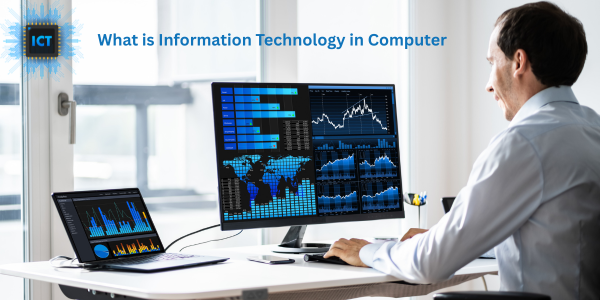
When individuals refer to technology, they typically think of smartphones, laptops, or other high-tech devices. But the simple wonders are in What is information technology in computer stems. IT is the pillar of data saving, data processing, and sharing, and not to mention the unsung hero of global connectivity. It handles internet banking, manages hospital databases, and drives your preferred streaming service. The cyber world is gasping for IT. In posing questions about what is information technology in computer, we isolate systems that help to coordinate well-automated information and devices to maintain the lives of modern civilization.
Imagine waking up one day and being without the internet. No emails. No Google Maps. No social media. Scary, right? Life without information technology would be like that. Every transaction that you complete online, every message, and every click is backed by a complex network of IT systems. In the following paragraphs, the simplification of meaning and scope of what is information technology in computer, as well as the different types of IT systems and competencies required to pursue a successful career in this expanding field, will be discussed. It will transform your thinking about IT, whether you are simply curious and considering a career in technology or not.
In the context what is information technology in computer, this post will provide a general definition of information technology, explain its differences from computer science, and outline career opportunities in the information technology field. I will provide practical hints with reference to IT certification and career advancement strategies, including how to make your IT boss your ally and have them advance you. I will also discuss the extent to which IT pervades our lives, through examples of cybersecurity and cloud computing. I will awaken your curiosity about the booming world of information technology. Contrary to what many people think, it is a lot closer and more interesting than you might think.
Table of Contents
- Introduction
- Understanding What is Information Technology in Computer Really Means
- Types of Information Technology
- What’s the Difference Between Information Technology and Computer Science?
- Computer Information Technology Skills You Should Know
- Careers in Computer Information Technology
- 6 Tips for Passing IT Certification Tests
- 7 Ways to Stand Out to Your IT Manager and Get Promoted
- 6 Signs a Cybersecurity Career May Be Right for You
- Conclusion
1-Understanding What is Information Technology in Computer Really Means
What is information technology in compute Aa layperson would come up with a definition like the processing and manipulation of information using computers, networks, software, and systems. IT enables firms to operate effectively, safeguard personal data, and connect people worldwide.
Think of it as the pain of any electronic device. Behind the scenes, IT professionals are busy at work regardless of whether you are scrolling the TikTok feed, watching Netflix, or checking your work email.
There are four fundamental issues in what is information technology in computer systems, which include:
- Hardware: The actual physical equipment, such as computers, routers, and servers.
- Software: The programs that perform functions on the hardware.
- Networks: The systems that make it all.
- Data Management: The organization and security of universal information.
2-Types of Information Technology

In the earlier sections, we have talked about what is information technology in computer, as applied to computers. We may now pass on to the leading divisions of the field.
The most common are the following:
Network administration: the design and upkeep of systems that facilitate interaction with other devices.
- Cybersecurity: Data security that is supported by a response to unauthorized data management, computer attacks, and other cyber threats.
- Cloud computing: an alternative to storing and controlling data on local systems, which utilize remote servers.
- Database management: the sequential procurement, storage, and quick retrieval of large volumes of information to be analyzed.
- Software development: the designing and manufacturing of software to handle particular problems and to simplify work.
- Technical support: the question of how to support users in diagnosing and resolving software and hardware problems.
The digital world cannot operate without all its branches.
3-What’s the Difference Between Information Technology and Computer Science?
The fact that computers and data overlap in some aspects can lead to confusion between the two occupations, which is understandable. Computers and data can be found in both areas, but it is the varying emphasis that matters.
- In information technology, the focus of attention is on the practical problems related to the application of the technology. IT workers install systems, work with data, secure networks, and perform on-the-job labor.
- Computer science, however, is primarily concerned with advancing technology. Computer scientists design software programs, artificial intelligence algorithms, and new programming languages.
Computer science is more of a concept and a study, as compared to what is information technology in computer which is more practical and applied in computing. To be more specific, IT is the computing technology that is integrated into everyday life.
4-Computer Information Technology Skills You Should Know
A combination of hard and soft skills is preferable for achieving a successful career in information technology. Critical information technology skills are
- Fundamentals of networking and troubleshooting.
- Knowledge of the most common operating systems (Windows, macOS, and Linux).
- Vital resources on cybersecurity.
- Cloud-computing services (e.g., AWS and Microsoft Azure)
- Big data and analytics.
- Verbal and written problem-solving.
High-caliber IT experts can convey complex technical information in plain language. Proficiency can make you stand out among your peers.
5-Careers in Computer Information Technology
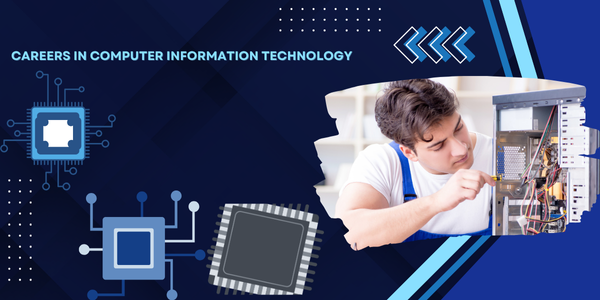
The US has a monolithic and continuously expanding IT employment requirement, which is expected to continue growing in the following decades.
Some of the more common career options are
- Network Administrator: monitors the stability of business systems.
- IT Support Specialist: Provides support to employees and customers.
- Database Administrator: oversees and protects massive databases.
- Cybersecurity Analyst: helps defend information technologies against potential attacks.
- Cloud Engineer: Graphical design and administration of cloud computing services.
- Systems Analyst: unites the IT and business forces in an organization.
It is in the future development of all these functions in what is information technology in computer , particularly in relation to computer systems, that there remains a significant opportunity for improvement.
6- 6 Tips for Passing IT Certification Tests

Information technology certification can lead to better-paying employment opportunities. Some of the ways you can become successful and attain that information technology certification are
- Select the most appropriate certification based on your goals. To demonstrate this point, consider the certification options of CompTIA A+, Cisco CCNA, or AWS Certified Cloud Practitioner.
- Practice: Studying a little at a time is better than cramming.
- Practice tests online—These provide an idea of the exam format and time.
- Study groups: When you can discuss topics with someone, it becomes easier to remember.
- Apply your learning: There is no better kind of learning than the hands-on type.
- Cram not; rest before the exam—a tired mind isno service to thee.
7- 7 Ways to Stand Out to Your IT Manager and Get Promoted
Some of the strategies that have been proven to help you build your career in the field of information technology are:
- Being proactive: Find a solution to a problem before it lands on your boss.
- Continuous training: Implement the latest trends and technological developments in the workplace.
- Effective communication: Communication skills are noteworthy, but collaboration and teamwork are even more critical.
- Be proactive—volunteer on projects that will challenge you.
- Take note of your triumphs—take note of your gifts.
- Pay it forward to the community—junior staff under your wing is what earns you the leadership qualifications.
- Ask questions—the most successful IT specialists will keep asking why.
It is not just the question of being the cleverest. Inquisitiveness, timeliness, and benevolence are essential.
8-6 Signs a Cybersecurity Career May Be Right for You
One of the most sought-after IT jobs is cybersecurity. These are some signs they tell that it may be you:
- You enjoy puzzles and discover some faults under wraps.
- You are analytical and meticulous.
- You worry about the new technology and internet security threats.
- You take pride in protecting systems or individuals.
- You thrive under pressure.
- You like a fast-paced world.
When you meet most of the aspects, then you can fit into cybersecurity.
9-Bringing It All Together
What is Information technology in computer A visible web of systems, people, and capabilities binds the virtual world together. IT is all around us, such as cloud computing and cybersecurity.
No matter how basic or complicated your plan may be, whether you’re learning the ropes or laying out an entire career in the field of technology, it is essential to remember that the human aspect is just as important as the machine aspect in information technology. It touches on value creation, problem-solving, breaking barriers, and securing and linking people.
You will realize that IT has an unspoken role to play in the functioning of the world and its various components. With just the right combination of skills, interest, and determination, you will be the next one to bail the world out.
Final Thought
What is Information technology in computer systems world is not just about the little screens and servers. The world constantly networks and organizes activities through the use of technology every day. IT enables communication and efficiency. It performs multiplicative value actions.
You have daydreamed about the opportunity of having a hand in working with technology, and now this is your opportunity, and you should make use of it. Numerous opportunities are awaiting operational problem solvers in the field of IT. The first step is to define what is information technology in computer, in the context of computers. The first thing that you do is always the easiest.
FAQs
1-What is computer information technology?
What is Information technology in computer can be defined as the use of systems, programs, and networks to organize, store, and protect information.
2-How are computer science and information technology different?
Computer science is concerned with the production of software, algorithms, and systems, while information technology focuses on the practical applications of technology.
3-What information technology do I need to know about?
Cybersecurity, cloud computing, network management, and database management are noteworthy core focus areas of IT and are unavoidably interconnected elements of the present information environment.
4-What are the advantages of a career in information technology?
An information technology career offers access to stable and demand-driven job opportunities, good pay, and extensive availability in a wide range of technology areas.
5-What or where do I begin in computer information technology?
The best way to build a strong career in the information technology sector is first to learn the fundamentals of information technology, become certified, and undertake an internship or project to gain exposure






- Be Respectful
- Stay Relevant
- Stay Positive
- True Feedback
- Encourage Discussion
- Avoid Spamming
- No Fake News
- Don't Copy-Paste
- No Personal Attacks
- Be Respectful
- Stay Relevant
- Stay Positive
- True Feedback
- Encourage Discussion
- Avoid Spamming
- No Fake News
- Don't Copy-Paste
- No Personal Attacks
